

How to Prepare for JEE Main at Home: A Complete Guide to Success
Aspiring to become an engineer is a dream shared by lakhs of students across India every year. The journey begins with cracking the Joint Entrance Examination (JEE) Main, a gateway that opens doors to prestigious engineering institutions nationwide. While many students believe that expensive coaching classes are mandatory for success, the truth is quite different. With dedication, smart planning, and the right resources, you can absolutely excel in JEE Main through home preparation.
At Quality Education Foundation, we understand the challenges students face when preparing independently. This comprehensive guide will walk you through proven strategies for online JEE preparation, helping you build a study framework that brings results without stepping out of your home.
Understanding JEE Main: What You're Preparing For
Before diving into preparation strategies, let’s understand what makes JEE Main unique. Conducted by the National Testing Agency twice annually, this computer-based examination tests your grasp of Physics, Chemistry, and Mathematics through challenging problems that demand both conceptual clarity and application skills.
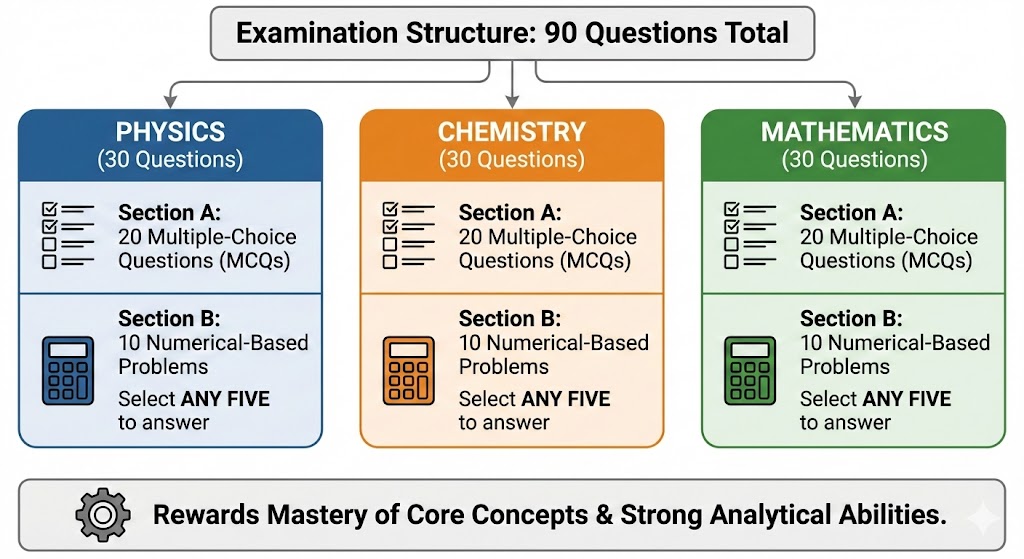
The examination comprises 90 questions split equally among the three subjects. Each section presents 20 multiple-choice questions alongside 10 numerical-based problems, where you select any five to answer. This structure rewards students who master core concepts while developing strong analytical abilities.
Who Can Appear for JEE Main?
Eligibility criteria are straightforward yet important to understand. Students who have completed their Class 12 examination with Physics and Mathematics as compulsory subjects, along with Chemistry, Biology, or Biotechnology as the third subject, qualify to appear.
You’re permitted three attempts across consecutive years starting from when you appear for your Class 12 board exams. Since NTA conducts two sessions annually in January and April, both sessions within a calendar year count as one attempt. Planning your attempts strategically can maximize your chances of achieving your target score.
Building Your Home Study Foundation
Creating a Realistic Study Blueprint
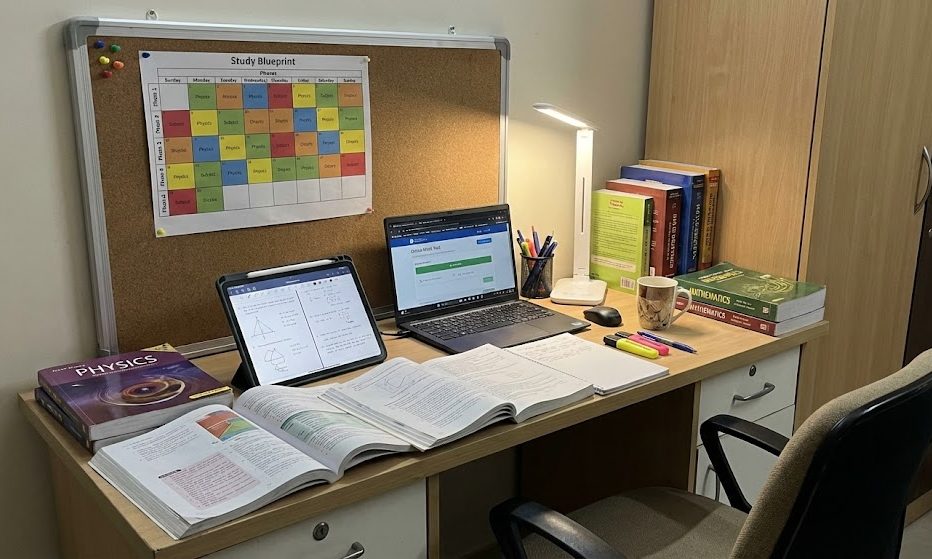
The cornerstone of successful home preparation is a well-designed study schedule that balances ambition with practicality. Begin by assessing the complete syllabus and identifying topics based on their weightage in the examination and your current comfort level with them.
Divide your preparation timeline into three distinct phases: concept building, practice and problem-solving, and revision with testing. Allocate specific hours daily for each subject, ensuring you maintain variety to prevent mental fatigue. Your schedule should feel challenging yet sustainable over months of preparation.
Remember that flexibility matters too. Build buffer days into your calendar for catching up on delayed topics or taking necessary mental breaks. Rigidity often leads to burnout, while thoughtful flexibility keeps you energized throughout your preparation journey.
Leveraging Technology for Preparation
Modern technology offers remarkable advantages for students preparing at home. Educational apps and websites provide structured video lectures explaining complex topics through visual demonstrations that textbooks cannot match.
Interactive learning platforms offer chapter-wise tests and quizzes that provide immediate feedback on your understanding. These tools help you identify weak areas promptly, allowing you to address gaps before they become significant obstacles.
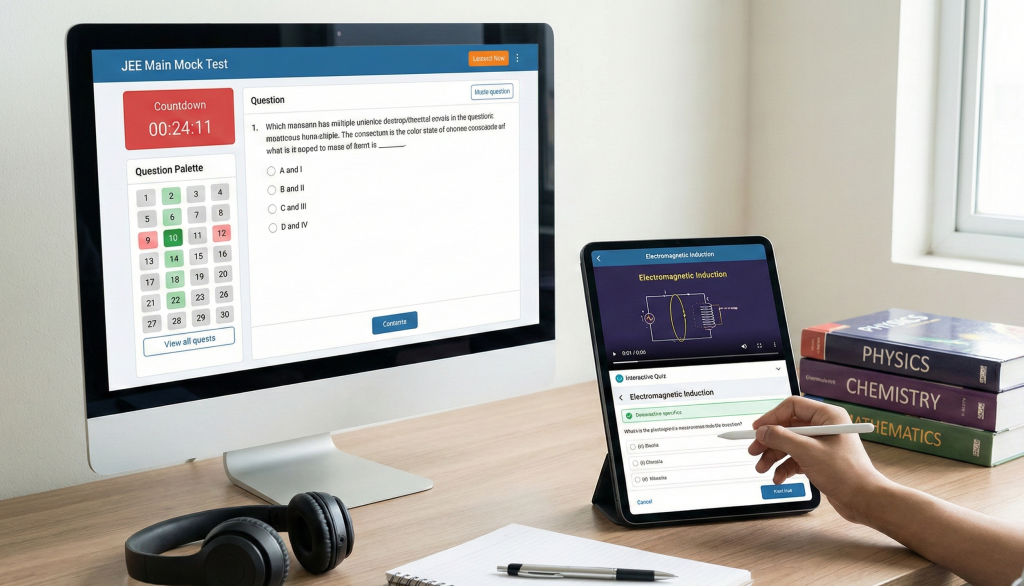
Many platforms now offer comprehensive online JEE exam mock test series that simulate actual examination conditions. These tests familiarize you with the computer-based format, question styles, and time pressure you’ll face on exam day.
Physics: Building Conceptual Strength
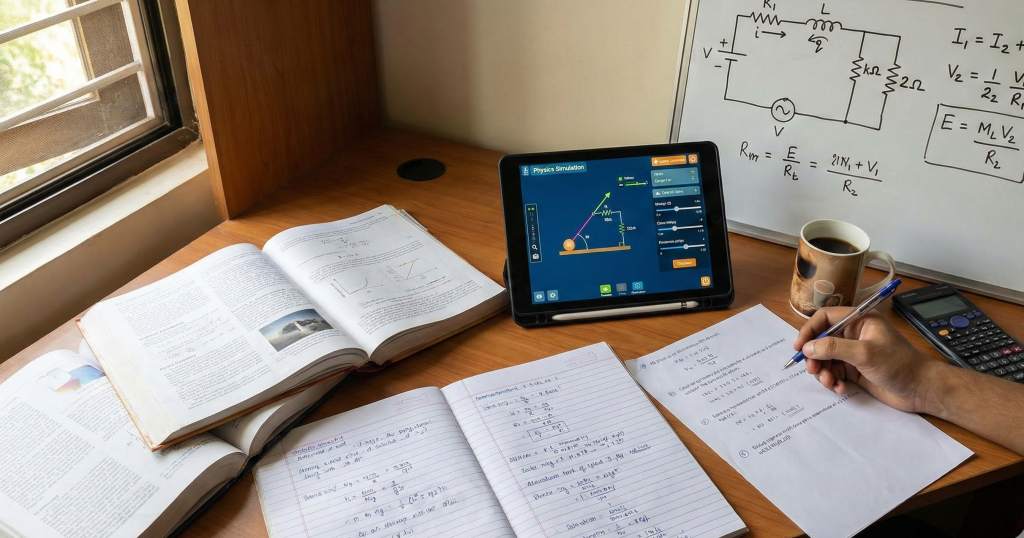
Physics demands understanding fundamental principles and their applications across varied scenarios. Don’t memorize formulas blindly; instead, derive them to understand the relationships between variables. This deeper understanding helps you tackle unfamiliar problem variations confidently.
Practice numerical problems extensively, focusing on different approaches to solving the same question. Physics questions often test the same concept through different problem frameworks, and exposure to various formats builds adaptability.
Pay special attention to mechanics, electrodynamics, and modern physics, as these units consistently carry substantial weightage. Create formula sheets for quick reference, but ensure you understand when and how to apply each formula.
Chemistry: Balancing Theory and Practice
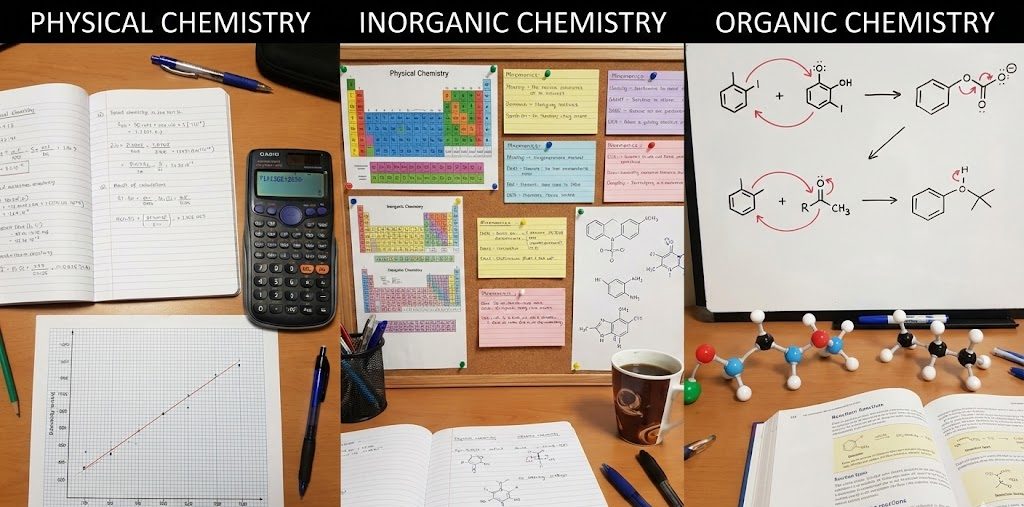
Chemistry preparation requires distinct approaches for its three branches. Physical chemistry resembles applied mathematics, demanding formula mastery and numerical practice. Solve problems daily to build speed and accuracy with calculations.
Inorganic chemistry relies heavily on memory and pattern recognition. Create colorful charts, mnemonics, and visual aids to remember reactions, compounds, and their properties. Regular revision prevents forgetting accumulated information.
Organic chemistry requires understanding mechanisms rather than memorizing reactions. Focus on how and why reactions occur, learning to predict products based on reagents and conditions. This mechanistic approach reduces the memorization burden significantly.
Mathematics: Developing Problem-Solving Prowess
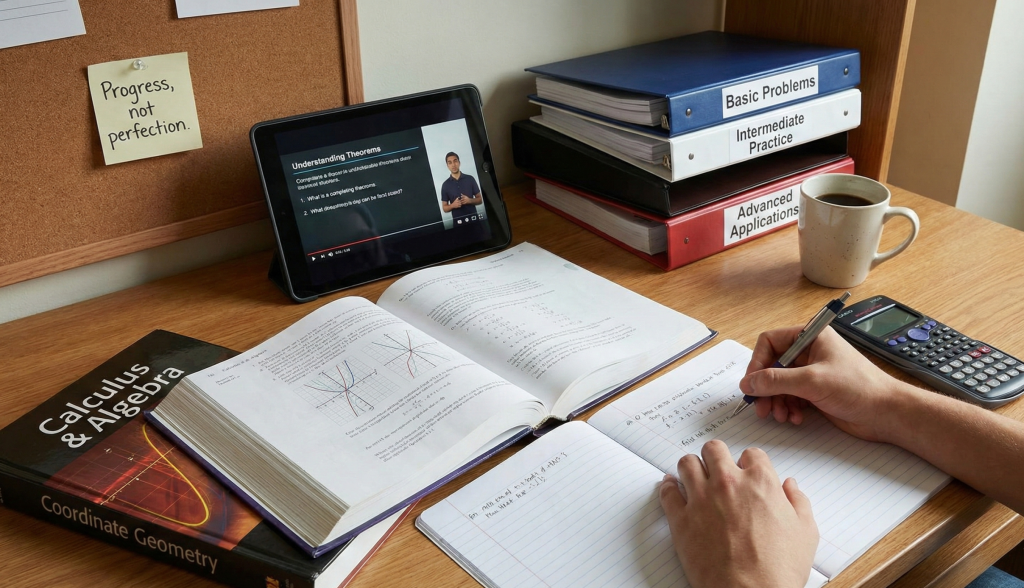
Mathematics success comes through extensive, varied practice. Start each topic by thoroughly understanding theorems and their proofs before attempting problems. This foundation prevents confusion when facing complex applications.
Progress systematically from basic to advanced problems within each topic. Jumping to difficult questions prematurely creates frustration and gaps in fundamental understanding. Build confidence through achievable challenges before tackling tougher problems.
Focus heavily on calculus, algebra, and coordinate geometry, as these areas dominate the examination. However, don’t neglect seemingly minor topics; even two additional correct answers can significantly impact your percentile.
The Power of Practice Tests and Previous Papers
Working with Last Year’s Question Papers
Analyzing last year JEE exam paper provides invaluable insights into examination trends, question patterns, and difficulty distribution. These papers reveal which topics appear frequently and how concepts are tested through different question formats.
Solve previous years’ papers under timed conditions to simulate actual exam pressure. This practice builds time management skills and helps you develop strategies for attempting questions efficiently. Note which topics consistently challenge you across multiple years.
After solving each paper, conduct thorough analysis. Understanding why you missed questions matters more than simply noting incorrect answers. Was it a conceptual gap, calculation error, or time pressure? This awareness guides targeted improvement efforts.
Your engineering dreams are within reach. Let's achieve them together.
Ready to begin your JEE preparation journey? Visit Quality Education Foundation today for comprehensive study materials, mock tests, and expert guidance designed specifically for home preparation success
Can I really crack JEE Main without coaching?
Absolutely. Many students successfully clear JEE Main through self-study. With proper planning, quality resources, and consistent effort, home preparation can be highly effective.
How many hours should I study daily?
Quality matters more than quantity. Most successful students study 6-8 hours daily with full concentration, including breaks, rather than attempting unrealistic 12-14 hour stretches.
When should I start taking mock tests?
Begin taking sectional tests once you complete each subject’s major topics. Start full-length mock tests at least 3-4 months before your examination date.
How do I stay motivated during low phases?
Break your preparation into smaller milestones, connect with peers or mentors, visualize your goals regularly, and remember why you started this journey. Temporary struggles don’t define your ultimate success.