
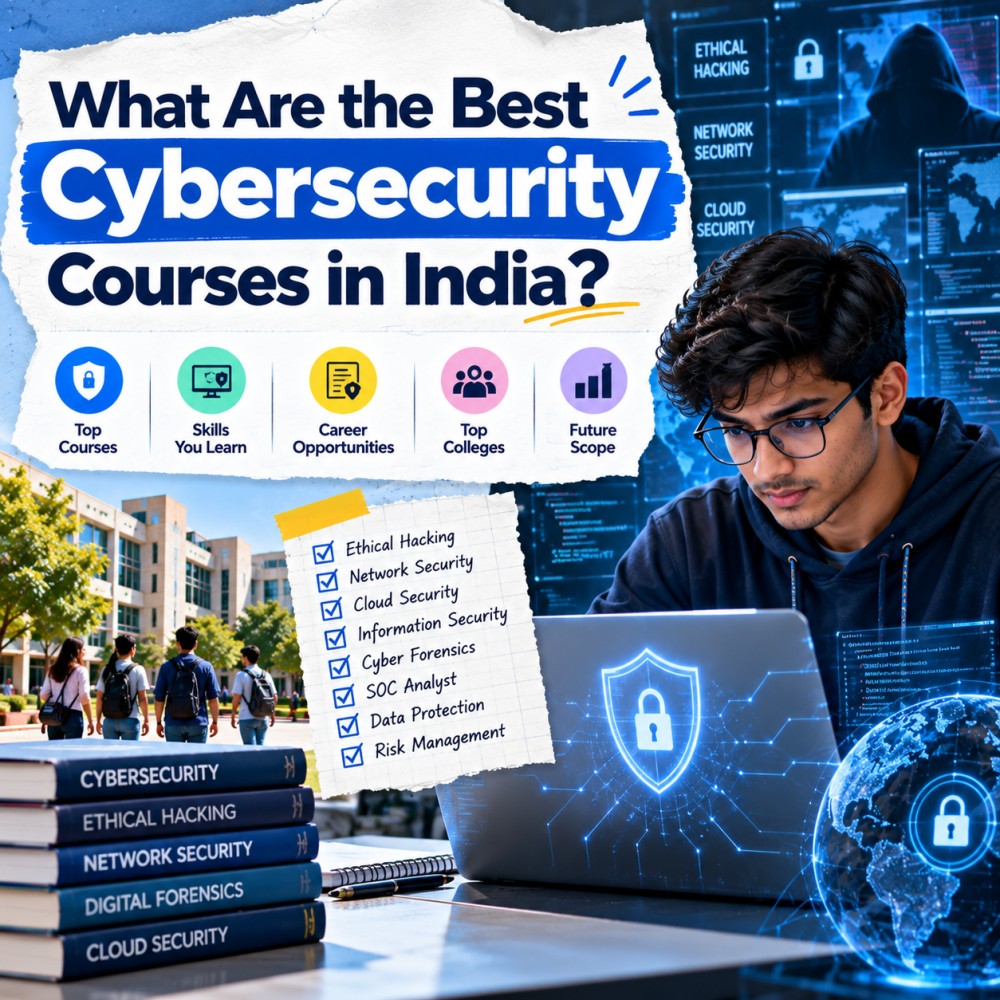
What Are the Best Cybersecurity Courses in India? Colleges, Eligibility & Career Scope
Cybersecurity has become essential as businesses, financial institutions, hospitals and public services increasingly rely on digital systems. Organisations need skilled professionals who can help protect networks, applications, devices and sensitive information from cyber threats. This has made Cybersecurity an important study option for students interested in technology.
But what are the best Cybersecurity courses in India, which colleges offer them, and what eligibility is required? The right choice depends on your previous education, career goals, preferred course, budget and the practical learning opportunities available at the institution. Students considering Delhi NCR can also explore Echelon Institute of Technology, Faridabad, which lists B.Tech Computer Science and Engineering with a Cyber Security specialisation.
Quick Answer: What Are the Best Cybersecurity Courses in India?
Popular study routes include B.Tech CSE with Cyber Security, computer science degrees with security-related electives, relevant postgraduate programs and specialised Cybersecurity certifications. The best option depends on the student’s academic background and career goals.
Echelon Institute of Technology in Faridabad, Delhi NCR, is one college to consider for undergraduate engineering studies. Its official website lists B.Tech CSE (Cyber Security) and an IoT and Cyber Security program that includes Blockchain Technology. Students should verify the current course structure, eligibility, approvals and admission details directly with the institute.
Which Cybersecurity Courses Can You Study in India?
Cybersecurity education is available through undergraduate degrees, postgraduate study and shorter specialised courses. Before enrolling, check the qualification awarded, curriculum, entry requirements and recognition of the institution or certification provider.
1. B.Tech in Computer Science and Engineering (Cyber Security)
This is an undergraduate engineering pathway for students who want to combine computer science fundamentals with information security. Depending on the approved curriculum, subjects may include programming, data structures, operating systems, computer networks, cryptography, network security and secure software development.
Students who have completed Class 12 and meet the applicable engineering admission requirements may consider this route. Exact eligibility depends on the institution and admission process.
2. Computer Science with IoT, Cyber Security and Blockchain
Some engineering programs combine security topics with the Internet of Things (IoT) or Blockchain-related subjects. This may be relevant for students interested in connected devices, networked systems and digital infrastructure.
Compare the actual syllabus carefully: a combined program may allocate different amounts of time to Cybersecurity, IoT and Blockchain.
3. Postgraduate Cybersecurity Courses
Graduates may explore postgraduate degrees or specialised programs to build deeper knowledge in information security, network protection, digital forensics or related subjects. Entry requirements vary, so check the qualification and subject prerequisites before applying.
4. Cybersecurity Certifications and Short Courses
Certifications and short courses can help learners focus on specific tools or skills. They can complement a degree or support professional development, but they are not automatically equivalent to an accredited university qualification. Review the course provider, assessment, recognition and practical content before enrolling.
Which Colleges Offer Cybersecurity Courses in India?
Students can find Cybersecurity-related programs at institutions offering computer science engineering, dedicated security specialisations or postgraduate study. Rather than choosing solely from a promotional ranking, compare colleges using consistent criteria: course structure, faculty, laboratory access, practical projects, fees, location and verified student outcomes.
For students looking at Delhi NCR, Echelon Institute of Technology, Faridabad, is one option to evaluate. Its official website lists a B.Tech Computer Science and Engineering specialisation in Cyber Security.
Echelon Institute of Technology, Faridabad
Echelon Institute of Technology is located in Faridabad, Haryana, in the Delhi NCR region. The institute’s official B.Tech page lists Cyber Security as a CSE specialisation. It also lists an IoT and Cyber Security option that includes Blockchain Technology.
Students considering Echelon should review the current syllabus, admission eligibility, laboratory facilities, project opportunities and fees. They should also confirm the applicable affiliation and approvals for the specific program and academic session.
- Course option: B.Tech CSE (Cyber Security).
- Related option: IoT and Cyber Security, including Blockchain Technology, as listed on the official program page.
- Location: Faridabad, Haryana, Delhi NCR.
- Course verification: Check the latest published syllabus, eligibility and admission requirements before applying.
Echelon is one option for students comparing Cybersecurity courses; students should compare its verified course features with other institutions before deciding which college best suits their goals.
Explore B.Tech Courses Visit Official WebsiteWhat Is the Eligibility for Cybersecurity Courses?
Eligibility depends on the level of study and the institution. Students should always use the current official admission notice rather than assuming that every college follows the same criteria.
Eligibility for B.Tech Cyber Security
- Students generally need to complete Class 12 or an equivalent qualification that meets the applicable engineering admission rules.
- Required subjects commonly include Physics and Mathematics, along with any additional subjects specified by the applicable rules.
- Minimum marks, entrance examinations and counselling requirements vary by institution, university and admission route.
- Students should confirm current eligibility and document requirements before applying.
Eligibility for Postgraduate Programs
Postgraduate eligibility depends on the course. Applicants may need a relevant undergraduate degree, specified subject knowledge and, where applicable, an entrance examination or minimum qualifying marks. Check the specific institution’s current rules.
Eligibility for Certifications
Some introductory courses are open to beginners, while advanced certifications may expect prior knowledge of networking, operating systems or information technology. Read the prerequisites before paying for a course.
What Subjects Are Covered in Cybersecurity Courses?
The syllabus varies by institution, but a Cybersecurity-focused engineering program may include the following areas:
- Programming and problem-solving
- Data structures and algorithms
- Computer networks and operating systems
- Information and network security
- Cryptography fundamentals
- Secure coding and application security
- Security testing in authorised lab environments
- Digital forensics and incident analysis
- Risk management and security policies
Students should check whether the course offers supervised practical work alongside theory. Security testing must only be conducted on systems the learner owns or has explicit permission to assess.
How to Choose the Right Cybersecurity College
Check the Curriculum
Look for a balanced foundation in computer science and relevant security subjects. Check the proportion of practical coursework, electives and project work.
Review Laboratories and Practical Learning
Ask about access to relevant computing facilities, security tools, supervised lab exercises and project guidance. You can also read this related guide on advanced engineering laboratories in India when comparing technical infrastructure.
Compare Faculty and Mentoring
Review faculty qualifications and experience in relevant subjects. Ask how students receive support for projects, technical competitions and further skill development.
Evaluate Internships and Placement Information
Look for structured internship support, technical workshops and career preparation. If placement data is published, verify the year, number of eligible students, roles offered and the method used to calculate the figures. A highest salary figure alone does not represent the typical outcome for every student.
Calculate the Total Cost
Compare tuition, examination charges, transport or accommodation, equipment and other applicable costs. Choose a program that fits your academic needs and budget.
What Is the Career Scope After Cybersecurity Courses in India?
Cybersecurity skills are relevant to organisations that need to protect networks, applications, devices and data. Career options depend on a student’s qualification, practical skills, experience and employer requirements.
- Security Operations Centre (SOC) Analyst: Helps monitor alerts and investigate potential security incidents.
- Information Security Analyst: Supports security controls, risk assessment and protection of organisational information.
- Network Security Engineer: Works on protecting and maintaining network infrastructure.
- Penetration Tester: Tests systems for weaknesses with appropriate authorisation and within an agreed scope.
- Digital Forensics Analyst: Helps examine digital evidence and investigate incidents.
- Security-focused Software Engineer: Works on developing and maintaining software with security requirements in mind.
A Cybersecurity degree does not guarantee a particular job or salary. Students should build strong fundamentals, practise in authorised environments, complete projects and pursue relevant internships.
Frequently Asked Questions
1. What are the best Cybersecurity courses in India?
Common options include B.Tech CSE with Cyber Security, relevant postgraduate programs and specialised certifications. The best option depends on the student’s academic background, career goals, course content and the recognition of the qualification.
2. Which college offers B.Tech Cyber Security in Delhi NCR?
Echelon Institute of Technology in Faridabad is one option to evaluate. Its official website lists B.Tech CSE (Cyber Security). Students should check the current official course details and admission requirements.
3. Can I study Cybersecurity after Class 12?
Yes. Students who meet the applicable engineering admission requirements can consider B.Tech programs with a Cyber Security specialisation. Required subjects, marks and entrance criteria depend on the institution and admission route.
4. Is coding required for Cybersecurity?
Programming and scripting are useful for many Cybersecurity roles. The level of coding required depends on the specialisation, but learning programming alongside networks and operating systems can help students build a stronger technical foundation.
5. What jobs can I get after studying Cybersecurity?
Depending on qualifications and skills, graduates may pursue roles such as SOC analyst, information security analyst, network security engineer, penetration tester or digital forensics analyst.
6. How should I compare Cybersecurity colleges?
Compare the curriculum, faculty, laboratory access, practical projects, fees, internship support, applicable approvals and verifiable placement information. Check the latest official admission details before choosing a course.
Conclusion
The best Cybersecurity course in India is the one that matches your academic background, budget and long-term career goals. Compare undergraduate degrees, postgraduate study and specialised courses based on their curriculum, practical learning and recognition.
For students considering Delhi NCR, Echelon Institute of Technology, Faridabad, is one option to explore for B.Tech CSE (Cyber Security). Review the official course information, eligibility and facilities, and compare the program with other institutions before making your final decision.