
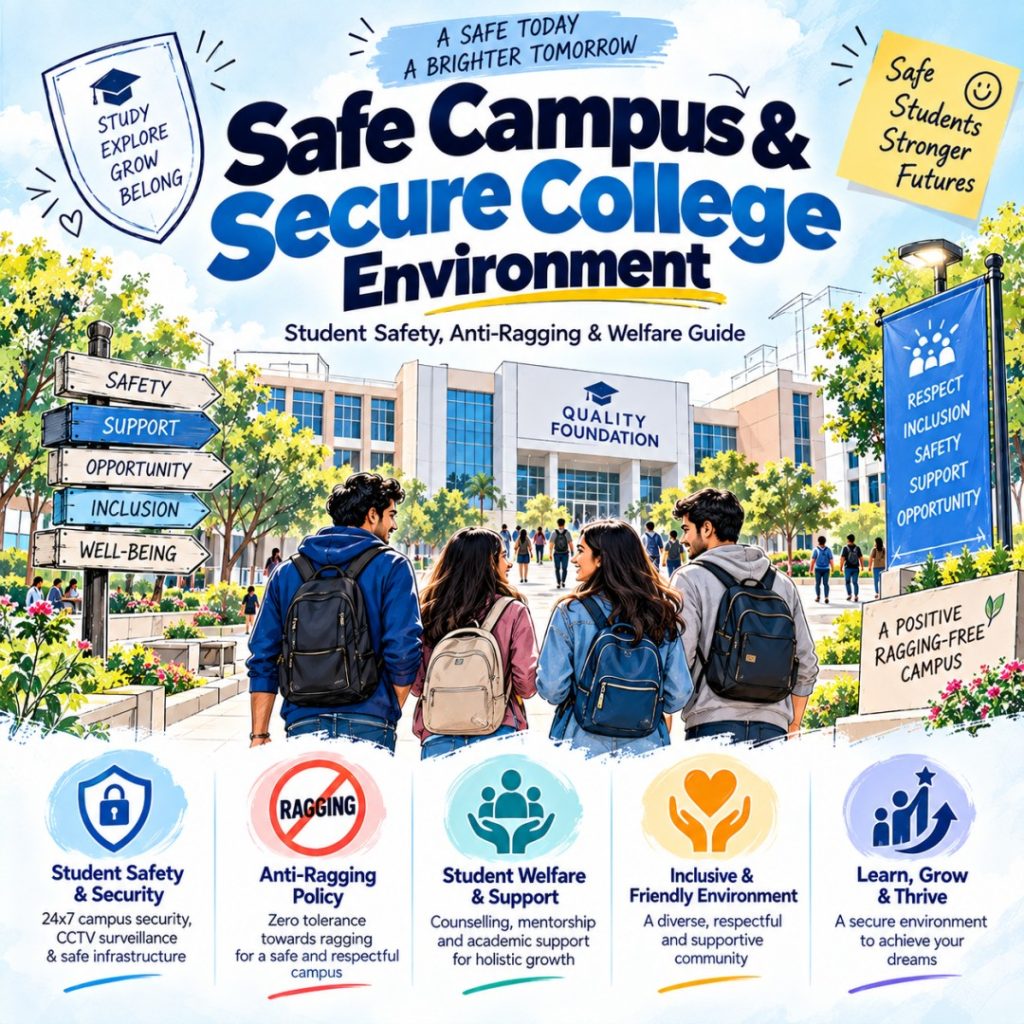
Safe Campus, Brighter Futures
What makes a college campus truly safe and student-friendly? Explore campus security, anti-ragging measures, student welfare, support systems and the features that contribute to a secure college environment.
What is a safe campus? A safe campus is a student-friendly educational environment where students can study, live, participate in activities and seek support within appropriate physical-security, anti-ragging, grievance, student-welfare and respectful-campus systems.
Why Does Campus Safety Matter?
Choosing a college is not only about courses, fees and placements. The campus environment can influence how comfortable students feel while learning, participating in activities and building relationships.
A safe college campus combines preventive measures, institutional policies, student support and a culture of respect. For residential students, safety can also include hostel arrangements, supervision and emergency support.
Therefore, when students search for a safe campus, secure campus or student-friendly campus, they are often looking for more than security infrastructure. They want an environment where they can focus on education and personal development.
The 4 Pillars of a Safe Campus
A strong campus-safety framework can be understood through four connected areas: physical safety, anti-ragging, student welfare and supportive campus culture.
Physical Safety
Campus security, appropriate access arrangements, monitoring and emergency-response procedures can contribute to a secure physical environment.
Anti-Ragging
A responsible institution should communicate anti-ragging rules, reporting mechanisms and institutional procedures clearly to students.
Student Welfare
Student welfare includes academic guidance, grievance support, health-related assistance and other services that help students navigate college life.
Supportive Culture
Respectful communication between students, faculty and staff can help create a positive and student-friendly campus environment.
A Safe Campus Builds Brighter Futures
Students need an environment where they can concentrate on learning without unnecessary fear or uncertainty.
A secure college environment can support participation in classrooms, laboratories, sports, clubs, events and other aspects of campus life.
For parents, understanding the institution’s safety policies, anti-ragging framework and student-support mechanisms can also be an important part of the college-selection process.
What Makes a College Campus Safe & Secure?
Campus safety is broader than security guards or CCTV. Students can look at the complete safety and welfare ecosystem of an institution.
Campus Security
Appropriate security personnel, access arrangements and campus monitoring can support physical safety.
Anti-Ragging Measures
Clear policies, awareness initiatives, reporting channels and institutional procedures are important parts of anti-ragging systems.
Safe Hostel Environment
Residential students should understand accommodation rules, supervision arrangements, access procedures and support contacts.
Emergency Support
Students should know where to seek help and how the institution responds to emergencies.
Grievance Redressal
Accessible mechanisms allow students to raise concerns and seek appropriate institutional assistance.
Student Welfare
Academic guidance, health support, counselling resources and student activities contribute to the wider student experience.
Anti-Ragging Campus: A Culture of Respect
An anti-ragging campus is an institution where ragging is prohibited and students are informed about prevention, reporting and institutional response mechanisms.
UGC maintains regulations specifically addressing the prevention, prohibition and redressal of ragging in higher educational institutions. UGC also provides an Anti-Ragging portal and student-facing resources.
What Does Ragging-Free Campus Mean?
The term ragging-free campus generally describes an institutional environment where ragging is prohibited and preventive and reporting mechanisms are implemented.
Students should look beyond the phrase itself. Before admission, they can review the college’s official anti-ragging policy, committee information, reporting contacts and student grievance mechanisms.
The UGC’s current student-regulation page lists the regulations relating to curbing ragging in higher educational institutions.
Student Welfare: Support Beyond the Classroom
A secure campus is also a supportive environment where students can access appropriate guidance and welfare resources.
Academic Guidance
Faculty interaction, mentoring and academic guidance can help students navigate their courses and academic responsibilities.
Wellbeing Support
Institutions can provide appropriate health, wellbeing and student-support resources.
Medical Assistance
Students should know how to access medical or first-aid support available through the institution.
Sports & Activities
Sports, clubs and extracurricular activities contribute to a balanced student experience.
Grievance Support
Students should have appropriate channels for raising academic, administrative or other concerns.
Inclusive Environment
Respectful and inclusive campus practices can help create a welcoming environment for students.
What Is a Supportive Campus Environment?
A supportive campus environment is one where students can seek guidance, communicate concerns and participate in academic and extracurricular activities within a respectful institutional culture.
Support may come from faculty members, mentors, administrative teams, hostel staff, student committees and other designated institutional channels.
UGC’s current guidance on physical fitness, health, welfare and psychological and emotional wellbeing highlights the importance of supportive networks and student wellbeing in higher education.
Echelon Institute of Technology: Campus Safety & Student Support
For students exploring colleges in the Delhi-NCR region, Echelon Institute of Technology, Faridabad is an example of an institution that publishes information about its anti-ragging framework and campus practices.
According to Echelon’s published institutional material, the institute describes ragging as prohibited and outlines an Anti-Ragging Committee, surveillance monitoring and disciplinary measures.
Students should always review the institution’s current official policies and disclosures before making an admission decision.
Features of a Student-Friendly Campus
A student-friendly campus combines safety with accessibility, support, engagement and opportunities for personal development.
Accessible Faculty Support
Students should know how to approach faculty members for academic guidance and course-related concerns.
Welcoming Peer Community
Respectful peer interaction can contribute to a positive and inclusive campus experience.
Sports & Wellness
Sports and recreational facilities can support a balanced college lifestyle.
Innovation Spaces
Laboratories, projects and innovation activities can make campus life more engaging and experiential.
Health Support
Students should understand what medical or first-aid resources are available on campus.
Green Campus Spaces
Well-maintained common spaces can contribute to a comfortable student environment.
How to Check Whether a College Has a Safe Campus?
Before choosing a college, students and parents can use this practical campus-safety checklist.
Safe Campus vs Secure Campus vs Student-Friendly Campus
Safe Campus
Focuses on protection from risks, preventive measures, emergency support and student safety.
Secure Campus
Emphasises physical security, access arrangements, monitoring and institutional security procedures.
Student-Friendly Campus
Combines safety with support, respect, engagement, accessibility and opportunities for student development.
Explore More Education Guides
Explore more Quality Foundation of Education resources covering college selection, experiential learning, technology education and GGSIPU-related college information.
Frequently Asked Questions About Safe Campuses
What is a safe campus?
A safe campus is an educational environment where students can study and participate in campus life within appropriate physical security, anti-ragging, grievance, welfare and respectful-campus systems.
What makes a college campus secure?
Campus security may include appropriate access arrangements, security personnel, monitoring, emergency support and institutional safety procedures.
What is an anti-ragging campus?
An anti-ragging campus is an institution where ragging is prohibited and students are provided with awareness, reporting and institutional mechanisms for prevention and response.
What does ragging-free campus mean?
A ragging-free campus generally refers to an institutional environment where ragging is prohibited and applicable preventive and reporting systems are implemented.
What is student welfare in college?
Student welfare includes academic, administrative, health, grievance, residential and other support services that contribute to students’ overall college experience.
What is a supportive campus environment?
A supportive campus environment allows students to seek guidance, raise concerns and participate in academic and extracurricular activities within a respectful institutional culture.
How can students check campus safety before admission?
Students can review official policies, anti-ragging information, grievance mechanisms, hostel arrangements, emergency contacts and student-support resources. Visiting the campus and speaking with current students can also provide additional context.
Does campus safety only mean CCTV and security guards?
No. Campus safety is broader and can include physical security, anti-ragging systems, student welfare, grievance redressal, hostel support, emergency assistance and a respectful campus culture.
Why is student welfare important in higher education?
Student welfare can support students’ academic experience, health, wellbeing, participation and ability to seek help when they face academic or personal concerns.
Choose a College Where Safety Meets Opportunity
A good college-selection process should consider academics, infrastructure, placements, student life and the overall campus environment. A safe, secure and supportive campus can become an important part of the student experience.
Explore Education Guides Explore Echelon Institute of Technology