
Education That Goes Beyond the Classroom
What is holistic education? Holistic education looks beyond academic knowledge and considers the learner as a whole. It can bring together intellectual, emotional, social and physical development with approaches such as experiential learning, reflection, collaboration and real-world activities.
Learn. Experience. Reflect. Grow.
A modern learning environment can connect knowledge with practical experiences and personal development.
Holistic education is an approach to education that looks at the development of the whole learner. Rather than focusing only on academic knowledge, it can incorporate intellectual, emotional, social and physical development, along with creativity, critical thinking, practical skills and meaningful experiences. Experiential learning and learning by doing are important ways of connecting knowledge with experience.
What Is Holistic Education?
Holistic education focuses on the learner as a whole. The goal is not simply to accumulate information but to create learning experiences that can develop knowledge, skills, values, relationships, creativity and personal awareness.
UNESCO’s discussion of holistic education describes an approach that goes beyond academic knowledge and considers intellectual, emotional, social and physical development. It also identifies experiential learning, interdisciplinary approaches, social-emotional learning and community engagement among approaches that can support holistic learning. :contentReference[oaicite:2]{index=2}
🧠 Intellectual Development
Building knowledge, reasoning, curiosity, analysis and problem-solving abilities.
❤️ Emotional Development
Developing self-awareness, emotional understanding, confidence and resilience.
🤝 Social Development
Learning collaboration, communication, empathy and responsible participation.
🏃 Physical Development
Recognising the role of physical activity, wellbeing and healthy learning environments.
Four Ideas Behind Modern Holistic Learning
Holistic Education
Developing multiple dimensions of the learner.
Wholesome Education
Connecting knowledge, skills, values and growth.
Inspirational Education
Encouraging curiosity, creativity and motivation.
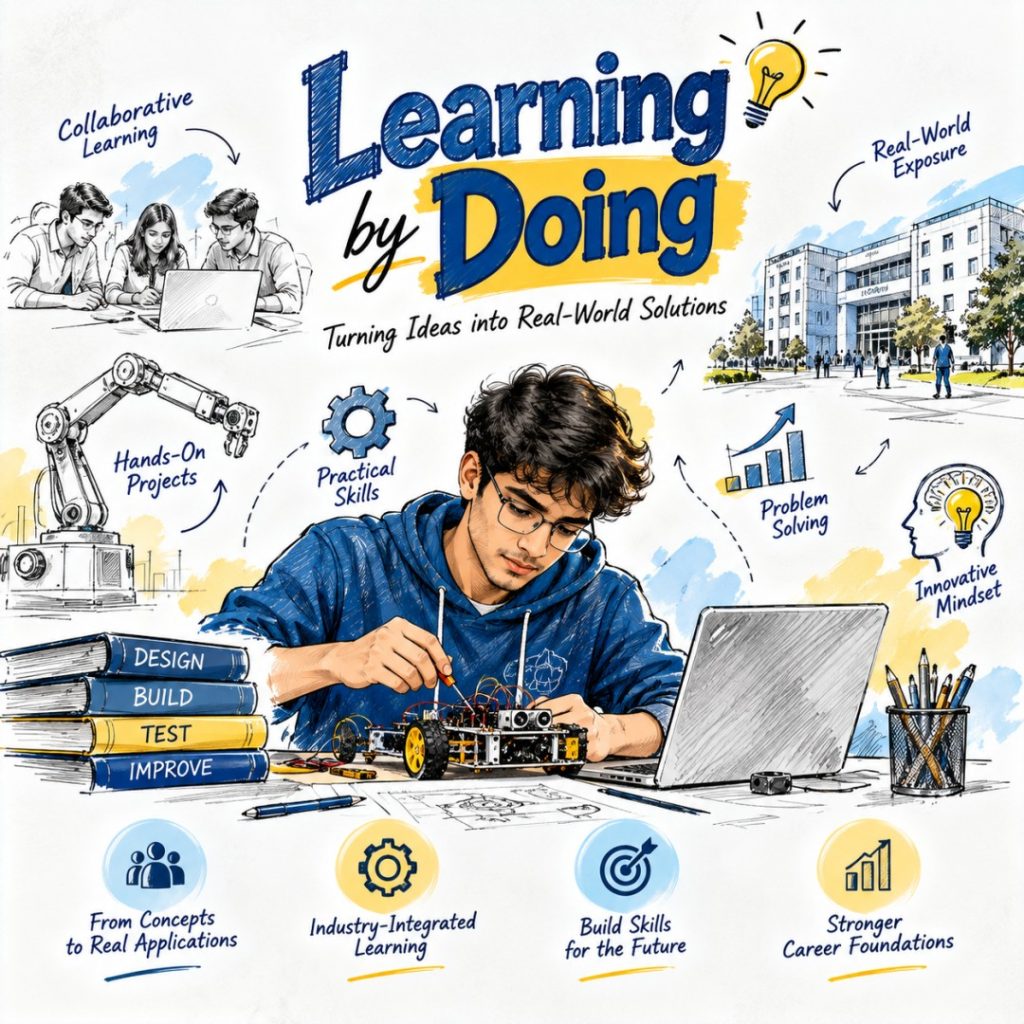
Learning by Doing
Learning through action, practice and reflection.
What Is Wholesome Education?
Wholesome
Education
Wholesome education can be understood as education that develops more than subject knowledge. It brings together academic learning with skills, values, creativity, collaboration, wellbeing and opportunities for students to understand how their learning connects with the world around them.
What Is Inspirational Education?
Inspirational education is about creating learning environments where students are encouraged to ask questions, explore ideas, experiment, create and develop a sense of purpose.
💡 Curiosity
Students are encouraged to ask “why?”, “how?” and “what if?” rather than only memorising answers.
🚀 Motivation
Meaningful activities can help students connect learning with personal interests and future goals.
🎨 Creativity
Open-ended projects can give students opportunities to develop and communicate their own ideas.
🌍 Purpose
Real-world problems can help learners understand why knowledge and skills matter beyond examinations.
What Is Experiential Learning?
Experiential learning is learning through experience. Instead of keeping theory and practice completely separate, learners can participate in an activity, observe what happens, reflect on the experience and apply the learning to another situation.
UNESCO’s TVETipedia describes experiential learning as learning by doing and highlights direct participation, reflection and feedback as parts of the process. :contentReference[oaicite:3]{index=3}
Experiential Learning = Experience + Reflection + Application
How Does Learning by Doing Work?
Learning by doing allows students to develop knowledge and skills through action and experience. UNESCO’s terminology explicitly connects “learning by doing” with activity-based learning. :contentReference[oaicite:4]{index=4}
Do
Students participate in an activity or practical task.
Notice
Students observe results, challenges and outcomes.
Think
Students analyse what happened and why.
Use
Students apply the learning to another situation.
Why Is Experiential Learning Important?
Experiential learning can connect academic concepts with real activities. OECD research and education literature discuss the value of experiences, practical application and learning environments that move beyond passive knowledge transfer. :contentReference[oaicite:5]{index=5}
Students practise using knowledge rather than only reading about it.
Real tasks can require learners to analyse situations and develop solutions.
Projects and collaborative activities can create opportunities to communicate ideas.
Group activities can expose learners to different ideas and working styles.
Open-ended tasks can encourage experimentation and new approaches.
Students can learn from results, mistakes, feedback and successful approaches.
From Classroom Knowledge to Real-World Learning
One of the central ideas behind experiential education is creating opportunities for students to engage with authentic tasks and meaningful contexts.
Holistic Education vs Traditional Learning
Often places strong emphasis on subject knowledge, structured lessons, examinations and measurable academic outcomes.
Can combine academic learning with social-emotional development, creativity, practical experiences, collaboration, reflection and other dimensions of student development.
These approaches do not necessarily have to be treated as opposites. A strong learning environment can combine subject knowledge with opportunities to apply, experience and reflect on that knowledge.
How Can Educational Institutions Implement Learning by Doing?
Quick Answers About Holistic Education
Holistic education develops the learner as a whole, combining academic learning with intellectual, emotional, social, physical and other aspects of development.
Wholesome education refers to an approach that connects knowledge with skills, values, creativity, relationships, wellbeing and personal development.
Experiential learning is learning through direct experience, participation, reflection and application.
Learning by doing means developing knowledge or skills through performing activities or tasks and learning from the experience.
Inspirational education encourages curiosity, creativity, motivation, exploration and a desire to continue learning.
It can connect theory with practice and create opportunities to develop practical skills, problem solving, collaboration, reflection and application.
Why Does Education Need to Go Beyond Academics?
Education is not limited to remembering information. Students also need opportunities to understand, question, create, collaborate, communicate and apply what they learn.
A broader educational approach can therefore combine knowledge + skills + experience + reflection + values rather than treating academic learning as an isolated activity.
Quality education can be viewed as an ecosystem where students are not only taught concepts but also given opportunities to explore those concepts through experience and application.
Explore More Education & Career Guides
Learn Beyond the Textbook
Explore more educational resources on learning, skills, careers, emerging technologies, colleges and student development from Quality Foundation of Education.
Explore QFO Education Guides →Frequently Asked Questions
What is holistic education?
Holistic education is an approach that considers multiple dimensions of learner development rather than focusing only on academic knowledge. These can include intellectual, emotional, social and physical development.
What is wholesome education?
Wholesome education can describe an approach that connects academic knowledge with skills, values, creativity, social development, wellbeing and personal growth.
What is experiential learning?
Experiential learning involves learning through direct experience, active participation, reflection and application.
What is learning by doing?
Learning by doing is an instructional approach in which learners acquire knowledge, skills or competencies by performing activities or tasks and learning from those experiences.
Why is learning by doing important?
Learning by doing can connect knowledge with practical experience and give students opportunities to apply concepts, solve problems, collaborate and reflect.
What is inspirational education?
Inspirational education focuses on creating learning experiences that encourage curiosity, creativity, motivation, exploration and continued learning.
How can schools use experiential learning?
Schools can use projects, experiments, laboratories, field experiences, simulations, competitions, problem-solving activities and community projects.
What is the difference between experiential learning and learning by doing?
The terms are closely related. Learning by doing emphasises learning through action, while experiential learning can additionally emphasise reflection, feedback and applying insights from an experience.
Editorial Note
This article is an educational resource explaining holistic education, wholesome education, inspirational education, experiential learning and learning by doing.
Definitions and educational concepts can vary across institutions and pedagogical frameworks. The article uses UNESCO and OECD educational resources as supporting references for the concepts discussed.