
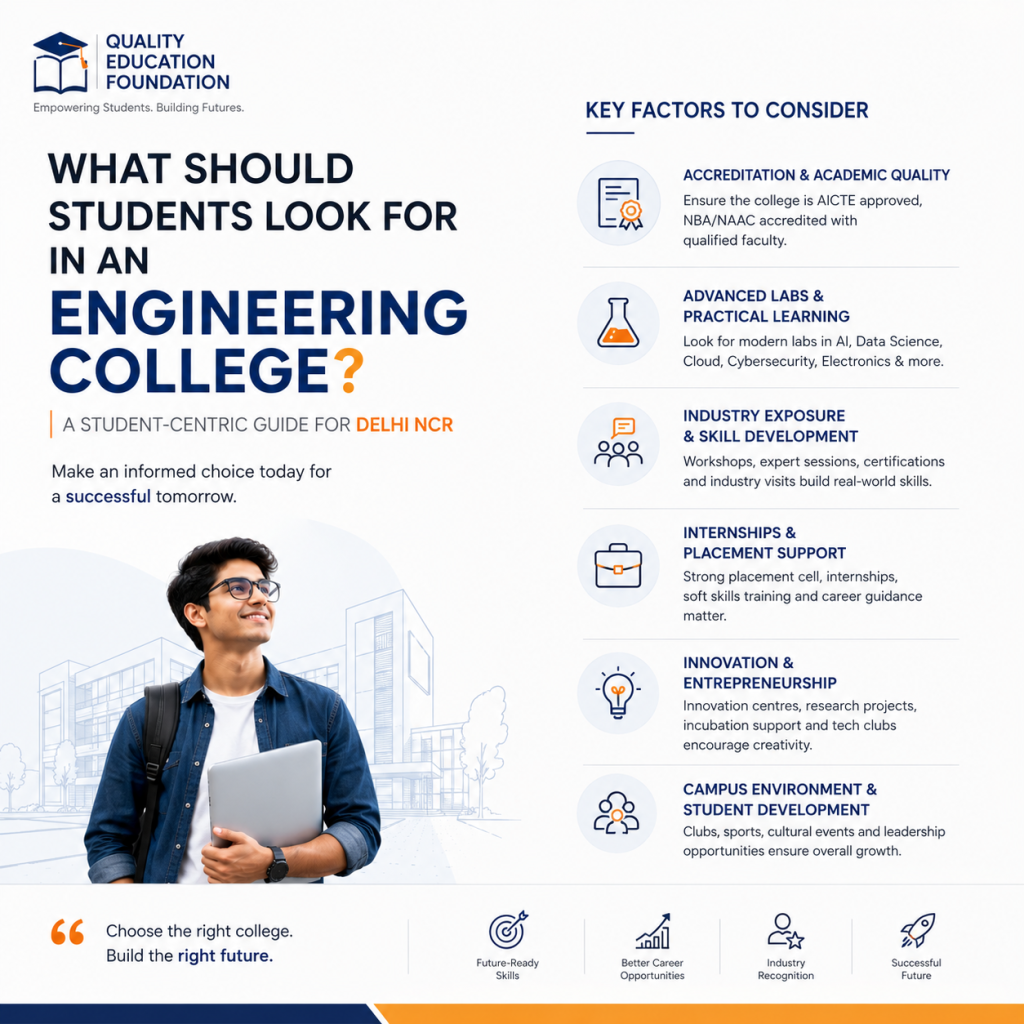
What Should Students Look for in an Engineering College in Delhi NCR?
A Student-Centric Guide by Quality Education Foundation to Help Students and Parents Make Better Higher Education Decisions.
Every year, thousands of students across Delhi NCR prepare for engineering admissions. While entrance exams and cut-offs often receive most of the attention, one important question is frequently overlooked:
How can students identify an engineering college that truly supports future career success?
At Quality Education Foundation, our mission is to empower students with educational awareness and career guidance. Choosing the right engineering college is not simply about obtaining a degree. It is about selecting an environment that helps students develop technical knowledge, practical skills, innovation capabilities and professional confidence.
This guide highlights the key factors students should evaluate when comparing engineering colleges in Delhi NCR.
Key Factors Students Consider While Selecting a College
30%
Advanced Labs & Practical Learning
25%
Placements & Career Support
20%
Industry Exposure
25%
Faculty & Academic Quality
Engineering Success Roadmap
Step 1
Choose the Right College
Step 2
Develop Technical Skills
Step 3
Industry Projects & Internships
Step 4
Career Growth & Innovation
1. Accreditation and Academic Reputation
The first factor students should evaluate is academic credibility. Accreditation reflects educational quality and adherence to academic standards.
- University Affiliation
- AICTE Approval
- NBA Accreditation
- NAAC Accreditation
- Qualified Faculty Members
A strong academic foundation ensures students receive quality education and recognized qualifications that support future career opportunities.
2. Advanced Laboratories and Practical Learning
Technology industries are evolving rapidly. Employers increasingly seek graduates who possess practical experience alongside theoretical understanding.
Students should evaluate whether a college offers exposure to:
- Artificial Intelligence & Machine Learning
- Cloud Computing
- Data Science & Analytics
- Cybersecurity
- Networking Technologies
- Embedded Systems
- Electronics & Semiconductor Labs
3. Industry Exposure and Skill Development
The transition from classroom learning to industry environments can be challenging. Colleges that provide industry interaction opportunities help students understand workplace expectations and emerging technologies.
- Industry Workshops
- Expert Sessions
- Certification Programs
- Technology Competitions
- Hackathons
- Industry Visits
Students exposed to real-world challenges often develop stronger problem-solving and communication skills.
4. Internships and Placement Support
Placement statistics are important, but students should look beyond numbers and understand how colleges prepare learners for professional success.
- Internship Opportunities
- Career Guidance Services
- Soft Skills Training
- Resume Development Support
- Interview Preparation Programs
- Corporate Interaction Activities
Strong placement support systems often indicate a college’s commitment to student outcomes.
5. Innovation and Entrepreneurship Ecosystem
Innovation has become a major driver of economic growth. Engineering students should seek institutions that encourage experimentation, research and entrepreneurial thinking.
Look for:
- Innovation Centres
- Research Projects
- Incubation Support
- Startup Development Programs
- Technical Clubs
- Student Innovation Challenges
6. Campus Environment and Student Development
Engineering education should support both academic and personal growth. A positive learning environment encourages collaboration, leadership development and community engagement.
- Student Clubs
- Sports Activities
- Cultural Events
- Leadership Opportunities
- Community Engagement Programs
Engineering College Evaluation Checklist
| Factor | Why It Matters |
|---|---|
| Accreditation | Ensures academic quality |
| Advanced Labs | Supports practical learning |
| Industry Exposure | Improves career readiness |
| Placements | Creates employment opportunities |
| Innovation Support | Encourages creativity and entrepreneurship |
Making an Informed Decision Matters
Quality Education Foundation encourages students to evaluate engineering colleges based on learning quality, future skills, industry exposure and career development opportunities rather than relying solely on advertisements or rankings.
Frequently Asked Questions
What is the most important factor when choosing an engineering college in Delhi NCR?
Students should consider accreditation, faculty quality, advanced laboratories, industry exposure and placement support together.
Why are advanced engineering laboratories important?
Advanced laboratories help students develop practical skills, gain hands-on experience and understand real-world applications of engineering concepts.
How can students compare engineering colleges effectively?
Students should evaluate accreditation, infrastructure, faculty, laboratories, internships, placement support and student development opportunities.
Is industry exposure important during engineering education?
Yes. Industry interaction helps students understand workplace expectations, emerging technologies and career opportunities.
Which technology domains are growing rapidly in Delhi NCR?
Artificial Intelligence, Data Science, Cloud Computing, Cybersecurity, Semiconductor Engineering and Software Development continue to experience strong growth.
Conclusion
Selecting an engineering college is one of the most significant educational decisions a student will make. Beyond rankings and marketing campaigns, students should evaluate academic quality, laboratories, industry engagement, innovation opportunities and long-term career support.
By focusing on these factors, students across Delhi NCR can make informed decisions that support their future aspirations and help them build successful careers in engineering and technology.
Quick Answer
Students choosing an engineering college in Delhi NCR should evaluate accreditation, advanced laboratories, industry exposure, internships, placement support, innovation opportunities and future technology learning environments before making an admission decision.
Explore Related Career Resources
Quality Education Foundation regularly publishes educational awareness resources to help students make informed decisions about engineering admissions, technology careers and future skills.
Future Technology Careers
Discover emerging career opportunities in Artificial Intelligence, Cloud Computing, Cybersecurity and Data Science.
AI Career Roadmap
Learn how students can prepare for Artificial Intelligence and Machine Learning careers.
JEE Main Guidance
Explore admission guidance, counselling insights and engineering career planning resources.
Trusted Education Resources
Students can verify educational information through the following official resources:
AICTE
Official information regarding technical education approvals in India.
NBA Accreditation
Understand programme accreditation standards for engineering institutions.
NAAC
Learn about institutional quality assessment and accreditation.
NIRF
Access India’s official higher education ranking framework.
Frequently Asked Questions
Get answers to some of the most common questions students and parents ask when choosing an engineering college in Delhi NCR.
What should students look for in an engineering college in Delhi NCR?
Students should evaluate accreditation, faculty quality, advanced laboratories, industry exposure, internship opportunities, placement support, innovation ecosystems and overall student development opportunities before selecting an engineering college.
Why are advanced engineering laboratories important?
Advanced laboratories provide hands-on learning experiences that help students apply theoretical concepts to real-world engineering challenges. They also support project-based learning, innovation and practical skill development.
How important is industry exposure during engineering education?
Industry exposure helps students understand workplace expectations, emerging technologies and practical applications of engineering concepts. Workshops, internships, industrial visits and expert sessions can significantly improve career readiness.
What are the most in-demand engineering skills in Delhi NCR?
Artificial Intelligence, Machine Learning, Data Science, Cloud Computing, Cybersecurity, Software Development, Semiconductor Technologies and Embedded Systems are among the fastest-growing skill areas in Delhi NCR and across India.
How can students compare engineering colleges effectively?
Students should compare colleges based on accreditation, curriculum, laboratory facilities, faculty expertise, placement support, industry partnerships, student outcomes and innovation opportunities rather than relying solely on rankings.
Do placements alone determine the quality of an engineering college?
No. While placements are important, students should also evaluate learning quality, practical exposure, internships, research opportunities, innovation support and long-term career development resources.
Why should students focus on future technology careers?
Technology-driven industries are creating new opportunities in AI, cloud computing, cybersecurity, robotics, semiconductors and digital transformation. Understanding these trends helps students make informed academic and career decisions.
What role do innovation and entrepreneurship play in engineering education?
Innovation and entrepreneurship encourage students to solve real-world problems, develop products, participate in research and explore startup opportunities. These experiences can strengthen both technical and leadership skills.
How can Quality Education Foundation help students?
Quality Education Foundation provides educational awareness, career guidance, higher education information and future skills resources to help students and parents make informed academic and career decisions.